





Fort Worth Periodontal is now Smiles Family Dental. Same Hulen St. office, same phone number, more ways to care for you. What's changing 3509 Hulen St., Suite 205(817) 737-0721
Smiles Family DentalFort Worth · Hulen St.
Snap-in dentures

Implant Dentures in Fort Worth

If your denture rocks, rubs, or needs a tube of adhesive to stay put, a few implants can change that. Implant dentures click into place and stay there until you take them out.

Implant Dentures at Smiles Family Dental in Fort Worth
Implants needed
Usually 2–4 per arch
Removable?
Yes, by you daily
Adhesive
Typically not needed
Current denture
Sometimes can be adapted

How snap-on dentures stay put

A regular denture rests on your gums and relies on suction, fit, and often adhesive. The lower denture is especially hard to keep in place because the tongue and cheeks push on it. Implant dentures solve this with small posts in the jaw.

Each implant has an attachment on top, and the denture has matching parts inside. When you press the denture down, it clicks onto the implants. Some designs use a thin metal bar connecting the implants, and the denture clips onto the bar. Either way, the denture holds steady when you bite into an apple or laugh at dinner.

Implant dentures vs. fixed full-arch teeth

Both options use implants to replace a full set of teeth, but they work differently. Implant dentures come out every night. Fixed full-arch teeth stay in and only your dental team removes them. Implant dentures usually need fewer implants, which can mean less surgery and lower cost. Fixed teeth often feel closer to natural teeth and leave the palate fully open.

Neither choice is right for every person. We help you weigh comfort, cleaning habits, bone volume, and budget so you can pick with confidence.

  • Implant dentures: removable, fewer implants, easier to clean by hand
  • Fixed full arch: stays in, more implants, more natural feel
  • Both: more stable chewing than a traditional denture
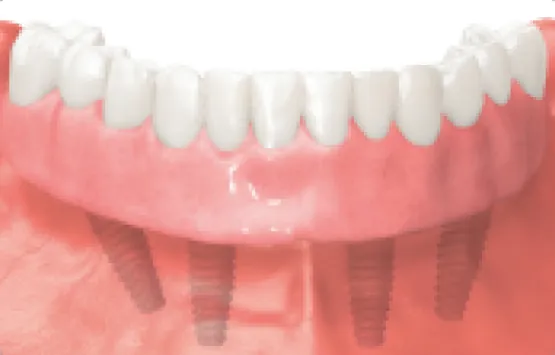
Implants hold a denture firmly in place.

Benefits patients notice most with implant dentures in Fort Worth, TX

The first change most people mention is confidence. There is less worry about the denture slipping during a meeting or a meal. Many patients find they can eat a wider range of foods and taste them better, especially when an upper implant denture can be made with less coverage of the palate.

Implants also put gentle pressure on the jawbone when you chew. That can help slow the bone loss that tends to happen under a regular denture over time, which affects how your face looks and how well any denture fits.

Can my current denture be used?

Sometimes. If your existing denture fits well and is in good shape, it may be possible to add attachments so it snaps onto new implants. This can be a practical first step for patients who want stability without a whole new set of teeth right away.

If your denture is worn, cracked, or no longer fits, a new one designed around the implants usually works better. We check this during your exam and tell you honestly which path makes sense.

Bringing your current denture to the consultation helps. We can look at how it fits, where it rubs, and how worn the teeth are. That quick check often tells us whether a retrofit will serve you well or whether a fresh start will feel better in the end.

Caring for implant dentures

Take the denture out each night, brush it with a soft brush, and store it as directed. Clean around the implant attachments in your mouth gently every day to keep the gums healthy. The small inserts that create the snap wear down over time and are replaced periodically, which is a quick visit.

Regular checkups let us look at the gums around each implant and keep the fit just right. For patients from Benbrook, Westover Hills, and the rest of west Fort Worth, our Hulen St. office keeps these visits close to home.

How implant dentures fit into your budget and timeline

For many patients, implant dentures sit in a comfortable middle ground. They cost less than fixed full-arch teeth because fewer implants and simpler parts are involved, yet they offer a big step up in stability over a traditional denture. That balance is why they are a popular choice for people who have worn dentures for years.

The timeline is flexible too. Implants can be placed when teeth are removed, or years after you started wearing a denture, as long as there is enough bone. During healing you keep wearing a softened denture, so you do not go without teeth. Once the implants are ready, attaching the denture is usually a short, painless visit. Some patients start with two implants on the lower jaw, where the fit is often hardest, and add implants on the upper jaw later.

Implant dentures may help if you

  • Have a lower denture that floats or shifts
  • Rely on adhesive every day
  • Get sore spots from denture movement
  • Avoid crunchy or chewy foods
  • Want more stability without fully fixed teeth
  • Are about to lose your remaining teeth
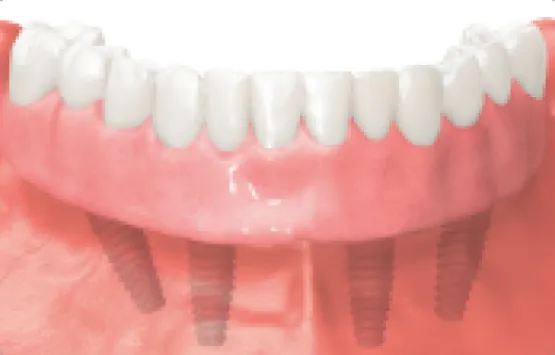
See the difference

Conventional vs. implant-supported dentures

Conventional denture
Conventional dentureRests on the gums and relies on suction or adhesive. It can shift when you eat or talk.
Implant-supported denture
Implant-supported dentureClips onto implants in the jaw, so it stays put and helps protect the bone.
At our Hulen St. office

What to expect, step by step

  1. Exam and scan

    We check your gums and current denture and take a 3D scan to see where implants can go.

  2. Implant placement

    Two to four implants are placed with numbing or sedation, and your denture is adjusted to wear during healing.

  3. Healing period

    Over a few months, the implants bond to the bone while you continue wearing a soft-lined denture.

  4. Attach and fit

    Attachments are connected, and your new or updated denture is fitted to snap securely into place.

Patient questions

Implant Dentures: common questions

Straight answers from our Fort Worth team. If your question is not here, call and ask. We are happy to talk it through.

How much do implant dentures cost?

Implant denture fees are shaped by the number of implants, whether one or both arches are treated, any teeth that must be removed, and whether we adapt your current denture or make a new one. Adapting an existing denture can lower the total in some cases. We share an itemized plan first, then help you check insurance benefits and look at financing, FSA or HSA use, or our savings plan.

Do I have to take implant dentures out at night?

Yes, implant dentures are usually removed every night. Taking them out lets your gums rest and allows you to clean both the denture and the implant attachments thoroughly. Sleeping with them in can increase wear on the attachments and raise the risk of gum irritation. Your dental team will show you the best routine for your specific design.

How many implants does an implant denture need?

An implant denture typically needs two to four implants per arch. Lower dentures often work well with two implants, while upper dentures usually need more because the upper jawbone tends to be softer. The exact number depends on your bone, bite, and the design chosen, which your doctor determines from your exam and 3D scan.

Is getting implants for a denture painful?

Getting implants for a denture is usually more comfortable than patients expect, since the area is numbed and sedation is available. Afterward, most people are sore for a few days and get by with a soft diet and a basic pain reliever. You can typically wear an adjusted denture during healing, so you are not left without teeth.

How long do implant dentures last?

The implants that hold an implant denture can last for many years and often decades with good care. The denture itself usually needs relining or replacing every several years as it wears. The small snap inserts wear faster and are swapped out periodically during routine visits. Good daily cleaning and regular checkups help everything last longer.

Can I upgrade from implant dentures to fixed teeth later?

In some cases, patients can move from implant dentures to fixed full-arch teeth later, though it often requires adding more implants. Whether that is possible depends on your bone volume and where the original implants were placed. If you think you may want fixed teeth someday, mention it at your consult so your plan can leave room for that option.

Paying for implant dentures

We file insurance for you, accept FSA and HSA cards, offer monthly financing and have an in-house savings plan for patients without dental insurance.

See payment options
Fort Worth · Hulen St.

Ready when you are.

Call our Hulen Street office or request a time online. We will review your insurance, explain every option in plain language and give you a written plan before anything starts.