



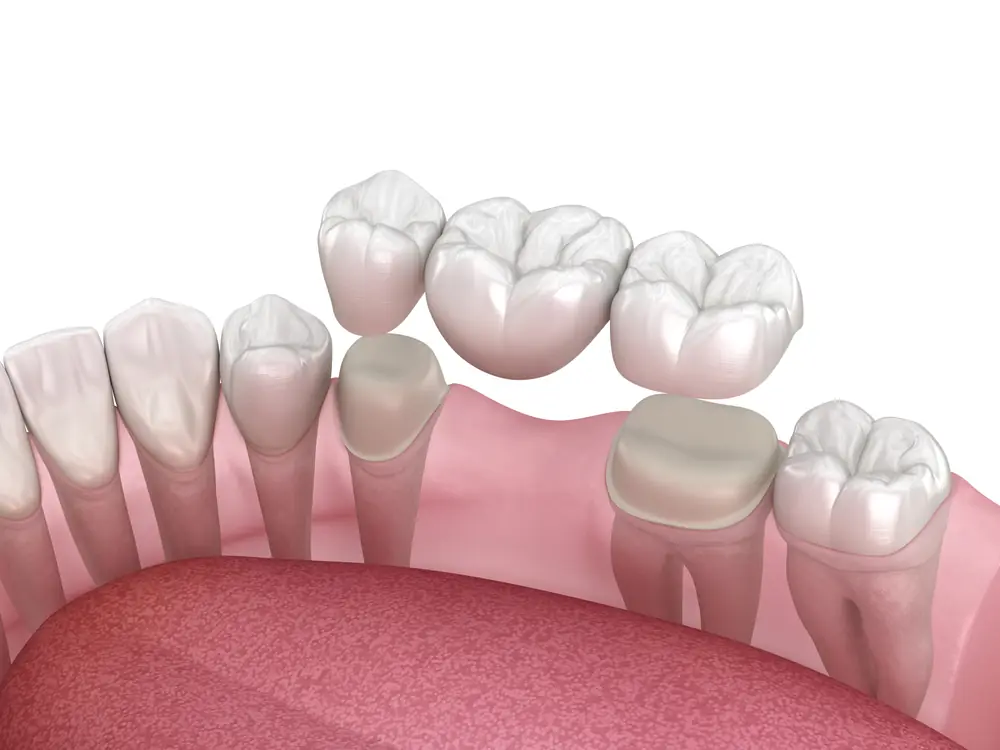
How a bridge is built
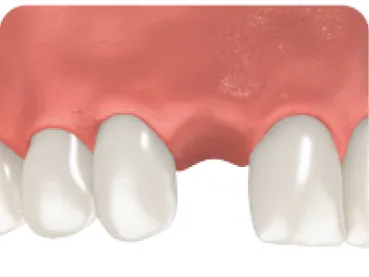
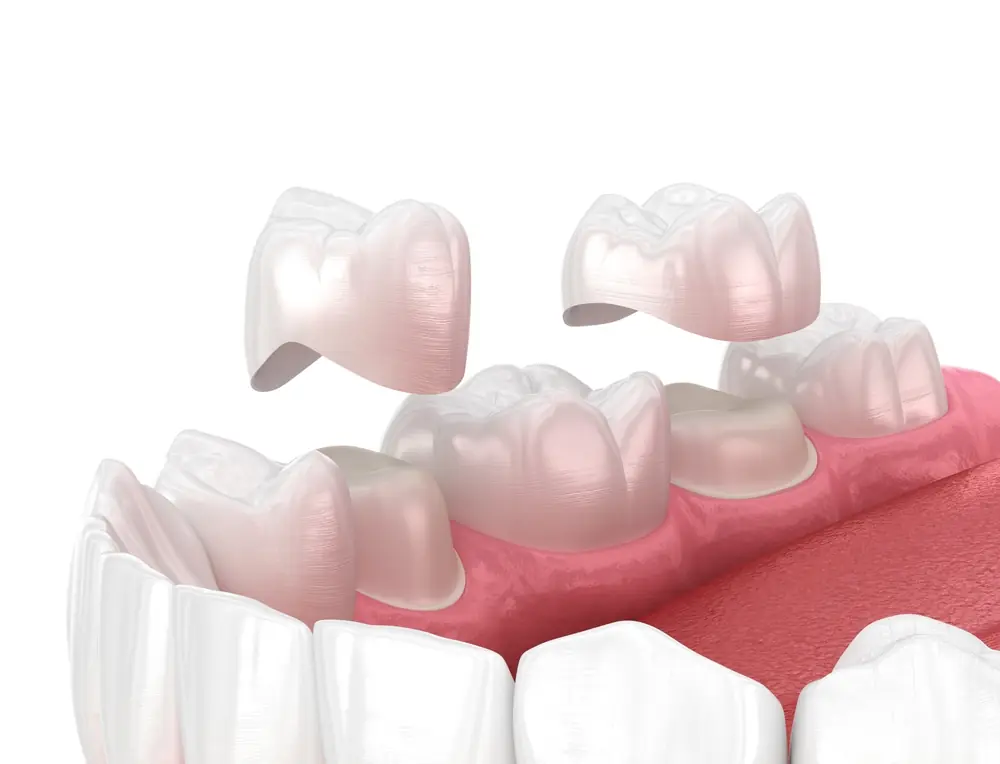
Picture a small span across a creek. The supports on each side are called abutments, and the piece hanging in the middle is the pontic. In a traditional bridge, the abutments are crowns placed on your natural teeth next to the gap. The pontic is attached between them and sits right where the missing tooth used to be.
Bridges are usually made of zirconia or porcelain and are shaded to blend in. Once cemented, you brush them like regular teeth and use special floss to clean under the replacement tooth.
A traditional bridge is a single piece. The crowns and the replacement tooth are joined together, so the bridge moves and wears as one unit. That is part of why it feels steady, and also why caring for the supporting teeth is so important to keeping it in good shape.
Types of bridges
Not every gap calls for the same design. Your dentist will recommend a style based on where the gap is, the health of the nearby teeth, and your bone.
- Traditional bridge: crowns on both neighboring teeth hold the replacement
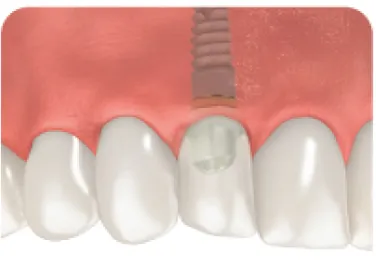
- Implant-supported bridge: implants, not natural teeth, hold the span
- Bonded bridge: small wings bond to the back of nearby teeth
- Cantilever bridge: support comes from one side only, used in select cases
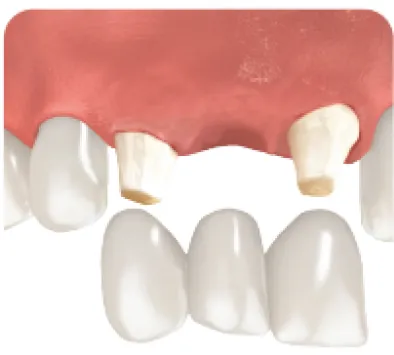
Dental bridges in Fort Worth, TX vs. a single implant
Since this office is well known for implant care, many patients ask which is better. Each has strengths. A traditional bridge is typically faster, since there is no healing period for bone. It can also be a good choice when the teeth next to the gap already need crowns.
An implant, on the other hand, does not require reshaping neighboring teeth and helps keep bone in place where the root was lost. If the teeth beside your gap are healthy and untouched, an implant may protect them better over the long run. We will lay out both options, with costs and timing, so you can decide.
Why replacing a missing tooth matters
It is tempting to leave a gap alone, especially in the back where no one sees it. Over months and years, though, the teeth on either side can tip into the space, and the tooth above or below can drift out of its socket. That shift can change your bite, make teeth harder to clean, and lead to gum problems.
Filling the gap with a bridge or implant keeps teeth where they belong and spreads chewing forces more evenly.
A gap can also affect how you chew. Many people start favoring the other side of the mouth without noticing, which can put extra wear on those teeth and strain the jaw muscles.
Keeping a bridge clean
Food and plaque can collect under the false tooth, so daily cleaning there is key. A floss threader, super floss, or water flosser makes it simple. We will show you how during your fitting visit.
Because the supporting teeth carry extra load, keeping their gums healthy is important. Patients with a history of gum disease may benefit from more frequent periodontal cleanings. Whether you live near TCU or out toward Aledo, regular checkups at our Hulen St. office help your bridge last.
Implant-supported bridges for several missing teeth
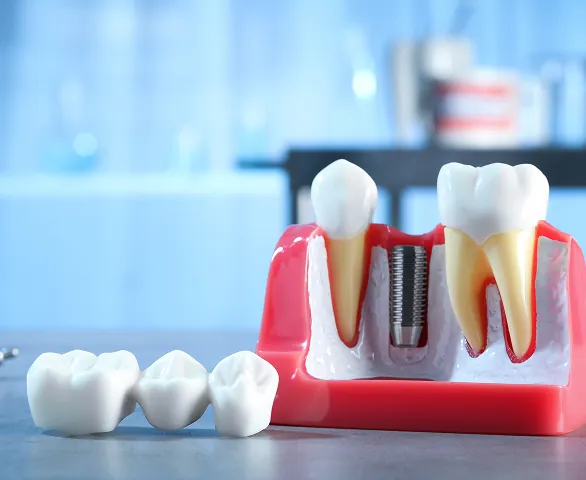
When three or more teeth are missing in a row, placing an implant for each one is not always needed. An implant-supported bridge uses two implants, one at each end of the gap, to hold a span of replacement teeth. This approach avoids crowning natural teeth and can cut down on the number of implants needed.
Because the implants sit in the jawbone, they help keep bone in place where teeth were lost. That can support the shape of your gums and face over time. Our office has long focused on implant care and gum health, so we look closely at whether the bone and gum in the area can support this kind of bridge. A cone beam 3D scan shows us how much bone is available and whether a graft would help.
Implant-supported bridges take longer than traditional ones, since the implants need a few months to heal. Many patients feel the result is worth the wait, especially when the neighboring teeth are healthy and untouched.
A bridge may be right if you
- Have one to three missing teeth in a row
- Have teeth next to the gap that need crowns anyway
- Want a fixed tooth that does not come out
- Prefer to avoid implant surgery
- Notice teeth shifting toward a gap