


Why the jawbone shrinks
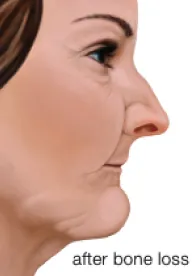
Bone in your jaw stays strong because tooth roots stimulate it every time you chew. When a tooth is lost, that signal stops. The body slowly reabsorbs the bone in that spot, and the ridge becomes thinner and shorter, especially in the first year.
Gum disease can also eat away at bone around teeth. Injuries, infections, long-term denture wear, and some developmental conditions can leave the jaw too thin as well.
Thin bone is not always visible from the outside, which is why imaging is so useful.
When a bone graft is needed
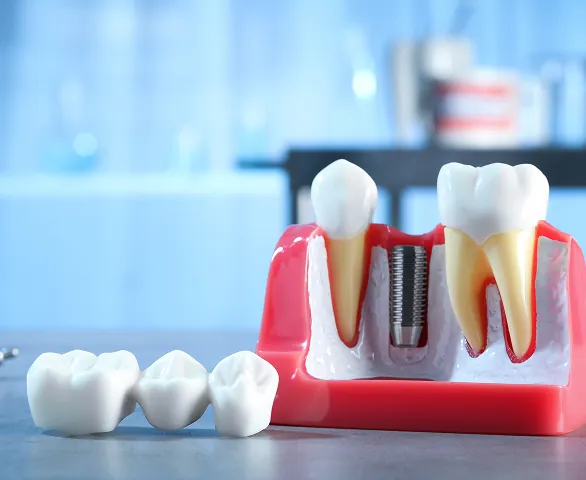
An implant needs enough bone around it to stay firm, much like a fence post needs solid ground. If the bone is too narrow or too short, the implant may not have enough support. A graft rebuilds the site so the implant has a stable base.
Implants are the most common reason, but grafting helps in other situations too.
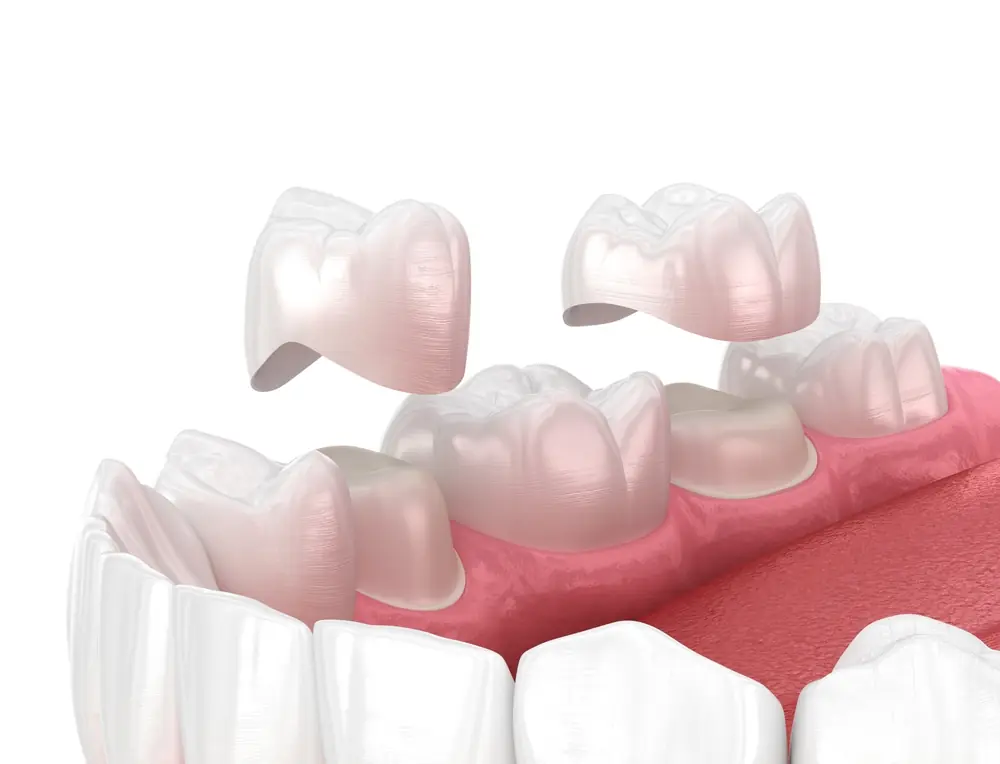
Grafting can also help with how a tooth replacement looks. When the ridge has caved in, a crown on an implant or a bridge can look too long or leave a dark gap near the gum. Rebuilding the bone gives the gum a fuller base, so the new tooth blends in more naturally next to its neighbors.
- Before an implant where the jaw has thinned
- Right after an extraction to hold the socket's shape
- Around teeth with bone loss from gum disease
- To support a sinus lift in the upper back jaw
- To fill a dent in the gums that affects appearance

Types of graft material
Bone graft material comes in several forms. Each acts as scaffolding, which your body gradually replaces with its own new bone.
Donor and animal materials are widely used and avoid a second surgical site. We will explain the options and why we suggest one for your case.
- Your own bone, taken from another area of the jaw
- Donor human bone, processed and sterilized by a tissue bank
- Animal-derived bone, often bovine, that is carefully purified
- Synthetic materials designed to support bone growth
Dental bone grafting in Fort Worth with 3D planning
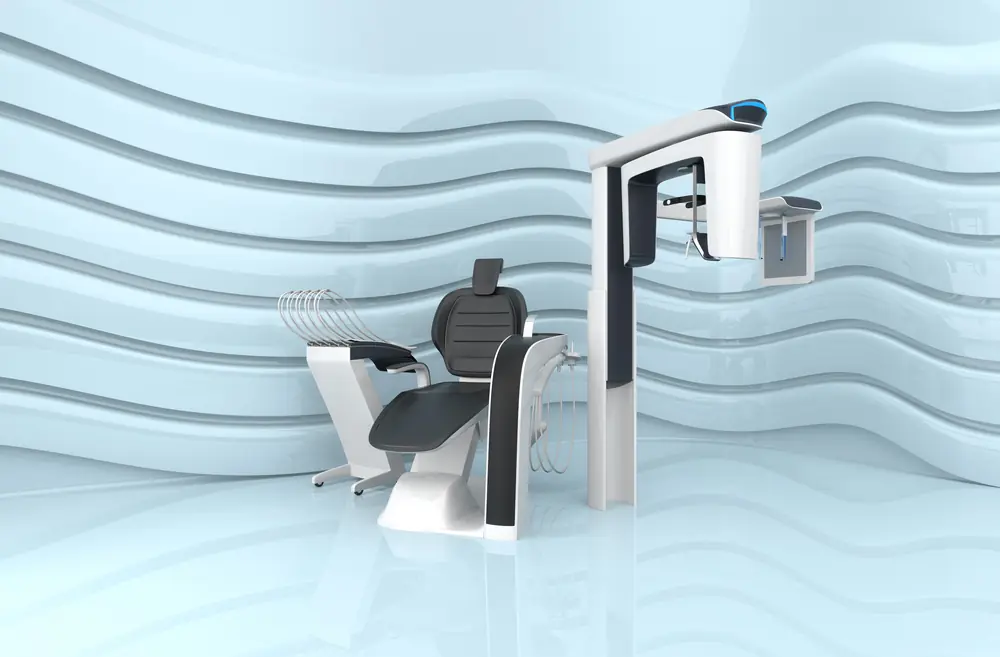
Before any dental bone grafting in Fort Worth at our practice, we take a cone beam 3D scan. This image shows the height, width, and density of your jaw in detail, along with nearby nerves and sinuses. It lets us see how much bone you have and how much you need.
When an implant is part of the plan, that same scan feeds into implant planning. Once the grafted bone is ready, our practice can use Yomi robotic guidance to place the implant along the digital plan.
Healing after a bone graft
Most small grafts are done in the office under local anesthetic, with sedation available. Afterward, expect some swelling and soreness for several days. You may notice small grains of material in your mouth, which is normal in small amounts.
New bone takes time. Many grafts need several months to mature before an implant can be placed, though some sites allow the graft and implant on the same day. Short follow-up visits and imaging track your progress, which keeps things simple for patients coming from Benbrook, Crowley, or closer in.
Ways to support a successful graft
Your body does the real work of turning a graft into bone, and there are steps you can take to help. Not smoking is one of the biggest. Smoking reduces blood flow to the gums and bone and can slow or prevent the graft from taking. If you use tobacco, we can talk about timing and support for cutting back before surgery.
Keeping blood sugar in range matters for patients with diabetes. Eating well, staying hydrated, and taking any medicine exactly as prescribed all help. Avoid pressing on the area with your tongue or fingers, and do not wear a denture over the site until we say it is okay.
Most grafts heal without trouble. Call us if swelling gets worse after the third day, if you have a fever, or if a large amount of material comes loose. A quick check can usually sort things out, and we would rather see you early than late.
A bone graft may be part of your plan if
- You want an implant to replace a missing tooth
- Your gums look thin or sunken where teeth are missing
- X-rays show bone loss from gum disease
- A tooth you plan to replace needs to come out
- Your dentures fit worse as the jaw changes
- You were told there is not enough bone for implants