




What gum disease is
Gum disease starts with plaque, the soft, sticky film that forms on teeth every day. If plaque stays put, it hardens into tartar that brushing cannot remove. The bacteria living in that buildup irritate the gums, and the gums respond by swelling and bleeding.
The earliest stage is called gingivitis. At this point the bone is still intact, and the damage can usually be reversed. If the infection keeps going, it moves deeper and becomes periodontitis. The gums start to separate from the teeth, forming pockets where bacteria hide and slowly wear away bone.
Many adults have some degree of gum disease and do not know it, because the early signs are easy to brush off. A little pink in the sink can seem normal. It is not. Healthy gums usually do not bleed with regular brushing and flossing.
How we decide which treatment fits
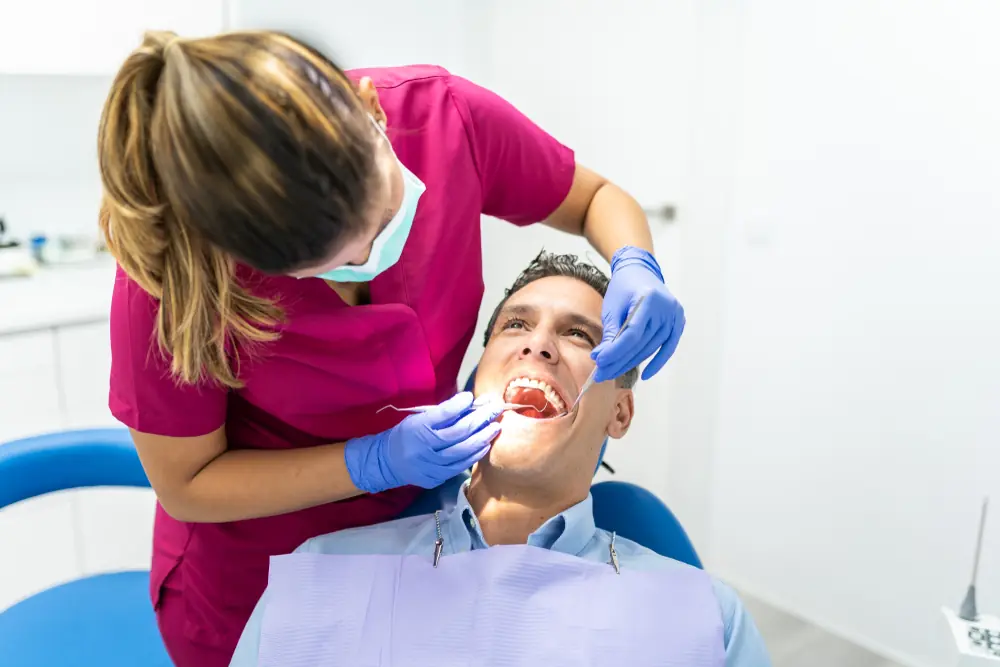
No two mouths are at the same point, so we do not use one plan for everyone. Our team measures the space between gum and tooth at several spots around each tooth. Healthy pockets are shallow. Deeper readings, bleeding, and bone loss on x-rays tell us how far the disease has spread.
We also look at things that raise your risk, such as smoking, diabetes, certain medications, pregnancy, and family history. Those details shape both the treatment and how often you will need follow-up visits.
We also check for tooth movement, gum recession, and any spots where the bone loss runs between the roots of back teeth. Each of these findings helps us predict how a tooth will respond. We share all of it with you in plain words, and you can ask as many questions as you like.
Gum disease treatment options in Fort Worth
Patients from Wedgwood, Westcliff, and across southwest Fort Worth who come to us for gum disease treatment usually start with nonsurgical care. Surgery is saved for areas that do not heal well enough with cleaning alone.
We will walk you through why a certain option makes sense for your mouth, and you will have a written plan before any work begins.
- Professional cleaning and home care coaching for gingivitis
- Scaling and root planing for tartar trapped below the gums
- Local antibiotics placed in stubborn pockets when helpful
- LANAP laser treatment for moderate to advanced cases
- Pocket reduction surgery when deep areas stay inflamed
- Grafting to replace gum or bone that has been lost
Why waiting makes it harder
Bone that supports your teeth does not regrow by itself once gum disease destroys it. Each year the infection stays active, the pockets can get deeper and harder to clean. Teeth may start to drift, leaving gaps that were not there before.
Over time, the result can be loose teeth or teeth that need to come out. Catching the problem sooner usually means fewer visits, lower cost, and a better chance of keeping every tooth you have.
Gum disease also tends to progress in bursts. A tooth may hold steady for months and then lose support quickly during a flare. Regular measurements are the only reliable way to know what is really happening below the surface.
Gum health and the rest of your body
Gum disease is an infection, and your body treats it like one. Researchers have found links between periodontitis and diabetes, heart disease, and problems during pregnancy. Those connections are still being studied, and gum care does not treat those conditions directly.
For people with diabetes, the link seems to run both ways. High blood sugar can make gum disease worse, and active gum infection can make blood sugar harder to manage. If you have a chronic health condition, let us know so we can plan around it.
Staying healthy after treatment
Treating the infection is the first half of the job. Keeping it from coming back is the second. After active treatment, most patients move to periodontal maintenance visits every three or four months. These visits clean below the gumline in ways a standard cleaning does not.
At home, we will show you tools that make a real difference for your gums, such as small brushes that fit between teeth or a water flosser. Small daily habits, done well, tend to matter more than any single visit.
Some patients also benefit from small changes outside the mouth. Quitting smoking, keeping blood sugar in range, and managing stress can all improve how gums respond. We are glad to talk through practical steps without any lecture.
Signs of gum disease
- Gums that bleed when you brush, floss, or eat
- Red, swollen, or tender gums
- Breath that stays bad even after brushing
- Gums pulling away from your teeth
- Pus between the teeth and gums
- Teeth that feel loose or have shifted
- A change in how your teeth meet when you bite