


Fort Worth Periodontal is now Smiles Family Dental. Same Hulen St. office, same phone number, more ways to care for you. What's changing 3509 Hulen St., Suite 205(817) 737-0721
Smiles Family DentalFort Worth · Hulen St.
Quick tooth repair

Dental Bonding in Fort Worth

Small chips and gaps can bother you every time you look in the mirror. Bonding fixes many of them in a single visit, usually with no drilling and no numbing.

Dental Bonding at Smiles Family Dental in Fort Worth
Visits
Usually 1
Time per tooth
Often 30–60 minutes
Numbing
Often not needed
Typical lifespan
Several years, varies by habits

What bonding can fix

Bonding is one of the most flexible tools in a dentist's kit. The resin is like a putty that can be sculpted directly on your tooth. Because very little or no natural enamel needs to be removed, it is a conservative choice for minor problems.

It works best for small, cosmetic repairs on teeth that are otherwise healthy. For large breaks or heavy biting areas, a crown or veneer may hold up better.

  • Chipped or cracked edges
  • Small gaps between front teeth
  • Stains that whitening does not lift
  • Teeth that look short or uneven
  • Exposed root surfaces near the gumline
  • Small cavities on front teeth

How dental bonding in Fort Worth, TX works

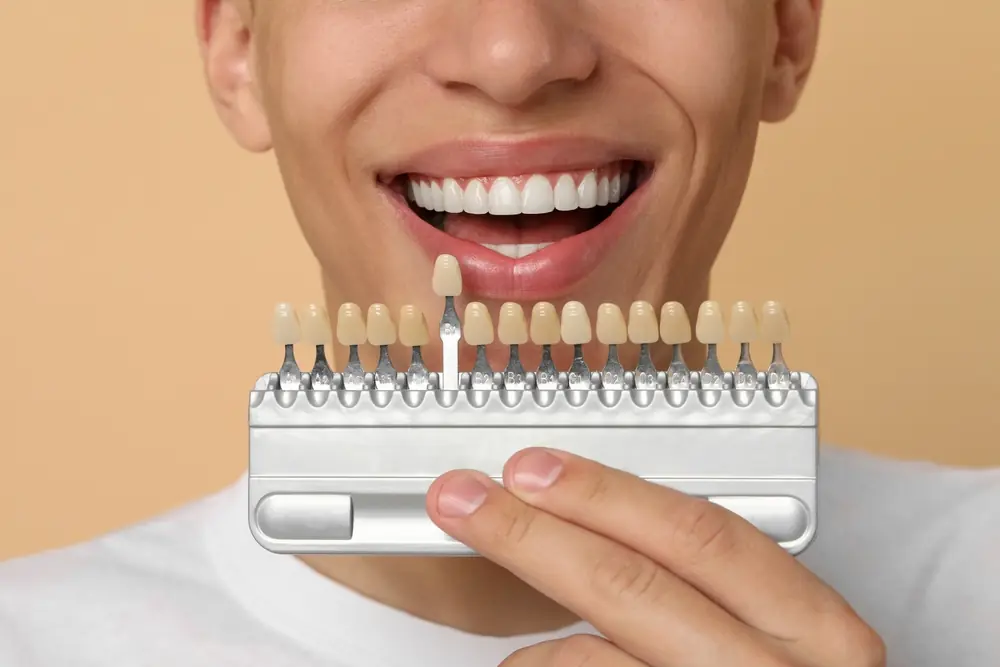
First, your dentist picks a resin shade that blends with your natural teeth. The surface of the tooth is lightly roughened and coated with a conditioning liquid so the resin can grip it.

Next, the resin is applied in thin layers. Each layer is molded and smoothed, then hardened with a blue curing light. Once the shape looks right, the tooth is trimmed and polished to a natural shine. You can leave and eat normally right after your visit.

Because bonding is done by hand, the result depends on careful shaping. Your dentist checks the tooth from several angles and in different light so the repair blends in with the teeth around it. Before you leave, we check that your bite feels normal and that nothing catches when you close your teeth together.

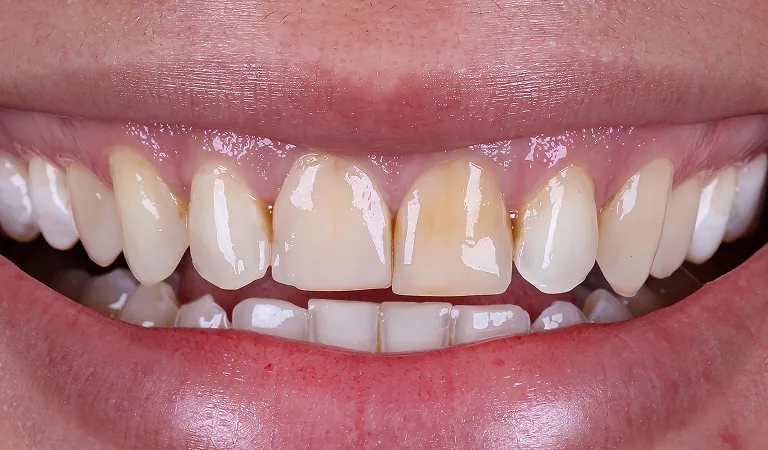
Tooth-colored resin is shaped and polished by hand.

Bonding compared with veneers and crowns

Patients often weigh bonding against porcelain veneers. Bonding is quicker, less costly, and usually reversible, since little enamel is removed. Veneers are more stain resistant, often last longer, and can create a more uniform look across many teeth.

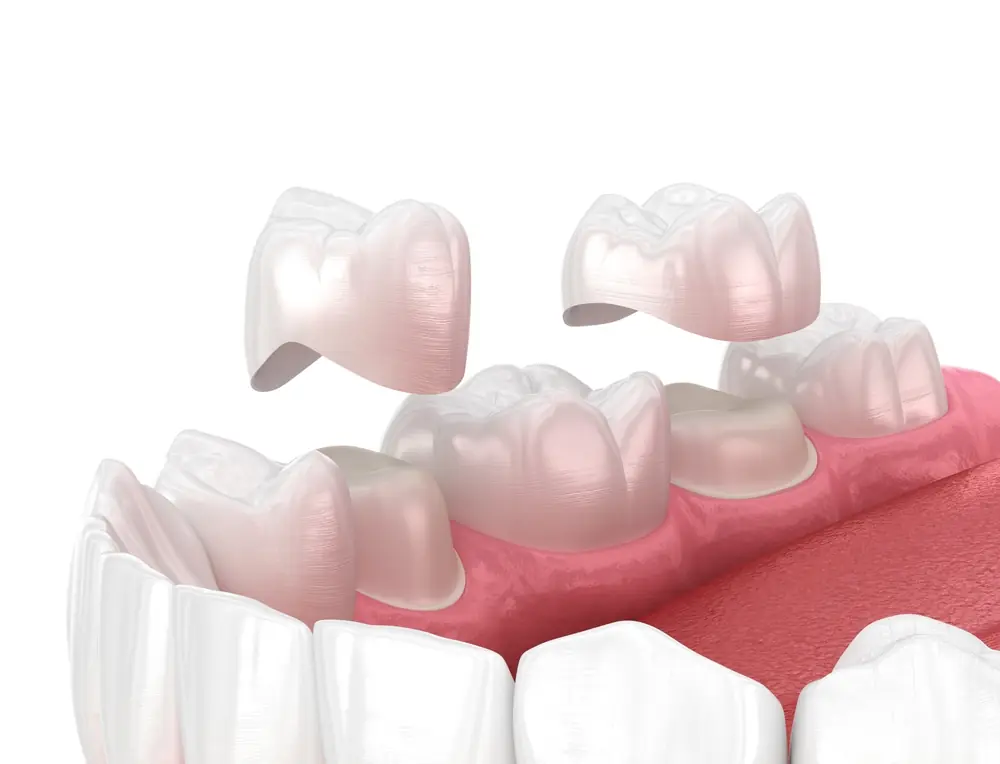
Crowns cover the entire tooth and are better suited to teeth with major damage. During your visit, we explain which option fits your goals and how long each one tends to last, so there are no surprises later.

Some patients start with bonding to see how they like a change in tooth shape, then move to veneers later. That step-by-step approach lets you make decisions at your own pace with no pressure.

Bonding for exposed roots

Gum recession is something our periodontal team sees often. When gums pull back, the root surface can become exposed and sensitive to cold or brushing. In some cases, a thin layer of bonding over the exposed area can reduce sensitivity and protect the root.

Bonding does not fix the cause of recession, though. If gum tissue is thinning, we may also talk with you about gum disease treatment or grafting to support the area over time.

Keeping bonded teeth looking good

Composite resin is strong, but it is not as tough as enamel. Avoid biting fingernails, chewing pens, or opening packages with your teeth. Resin can also pick up stains, so rinsing after coffee, tea, or red wine helps.

Regular cleanings keep the surface polished. Over the years, bonding may need a touch-up or replacement. For families around Wedgwood and White Settlement, our Hulen St. office makes those quick visits easy to fit in.

Is bonding right for kids and teens?

Bonding is a common choice for younger patients who chip a front tooth during sports or play. Because it removes little or no enamel, it is gentle on teeth that are still developing. It can also be updated easily as a child grows and their smile changes. Many families see it as a smart way to restore a tooth now while keeping future options open.

Teens who are finishing orthodontic care sometimes use bonding to even out small gaps or uneven edges once braces or aligners are done. The resin can be shaped right in the chair, so they see the change in one visit.

Adults benefit just as much. Whether the goal is fixing a chip from years ago or softening a worn edge, bonding is a low-pressure way to see how a small change feels before considering anything more involved. For athletes of any age, a custom mouthguard can help protect bonded and natural teeth alike.

Bonding may be a good choice if you

  • Have a small chip on a front tooth
  • Want to close a minor gap
  • Have a tooth that looks shorter than the rest
  • Have a stain that whitening will not remove
  • Feel sensitivity from an exposed root
  • Want a quick, budget-friendly cosmetic fix
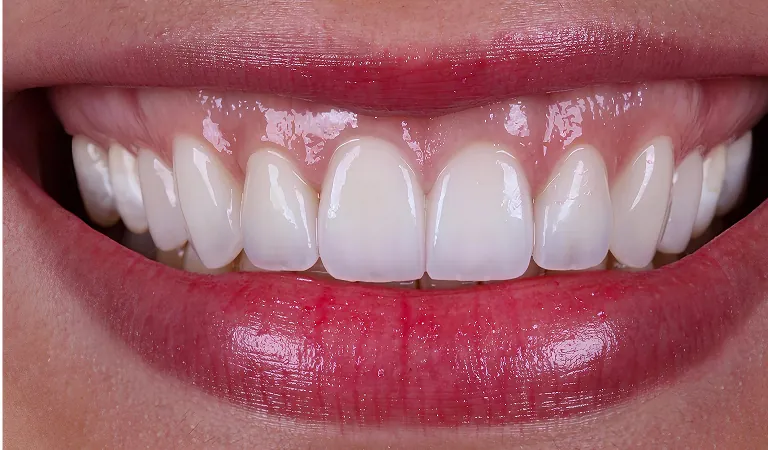
Smile gallery

Real smiles from Smiles Family Dental

Drag the handle to compare.

Smile after treatment
Smile before treatment
BeforeAfter
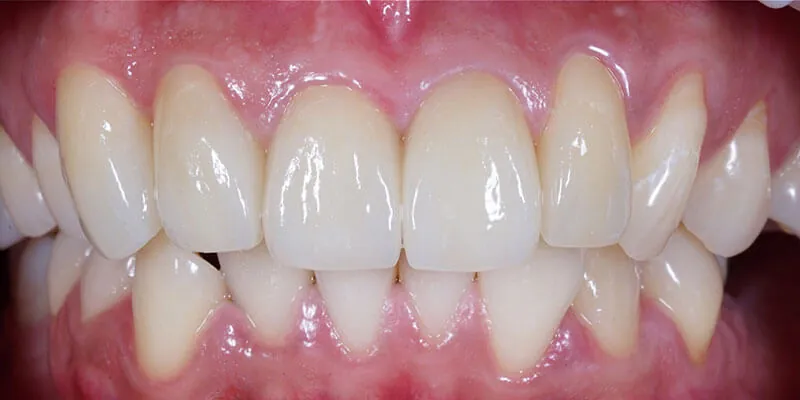
Cosmetic smile makeover
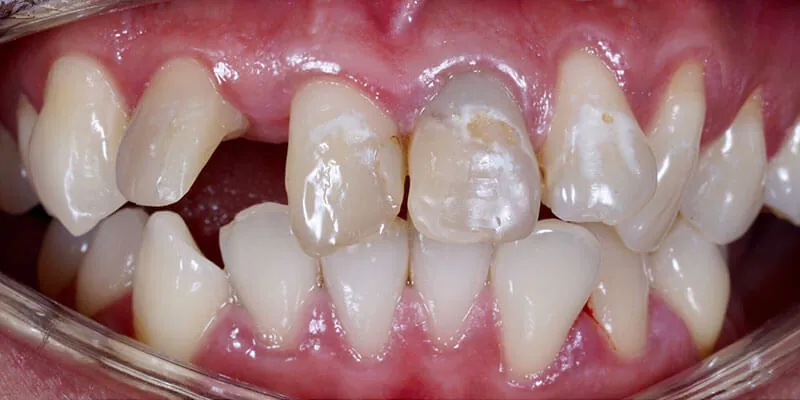
Smile after treatment
Smile before treatment
BeforeAfter
Restoring broken and missing front teeth
At our Hulen St. office

What to expect, step by step

  1. Shade match

    Your dentist selects a resin color that blends with your natural teeth.

  2. Prepare the surface

    The tooth is lightly roughened and conditioned so the resin bonds securely.

  3. Sculpt and cure

    Resin is applied in layers, shaped by hand, and hardened with a curing light.

  4. Polish

    The tooth is trimmed and polished, and your bite is checked before you leave.

Patient questions

Dental Bonding: common questions

Straight answers from our Fort Worth team. If your question is not here, call and ask. We are happy to talk it through.

How much does dental bonding cost?

Bonding is usually one of the more affordable ways to improve a smile. The fee is based on the number of teeth and the amount of resin each one needs. Insurance may pay toward bonding when it repairs damage like a chip or small cavity, while purely cosmetic bonding is often not covered. You get a clear quote before we start, and paying over time, using an FSA or HSA, or joining our savings plan are all options.

Does dental bonding hurt?

Dental bonding usually does not hurt. Most bonding is done on the surface of the tooth, so numbing is often unnecessary. If the bonding repairs a cavity or covers a sensitive area near the gumline, your dentist may use local anesthetic. Afterward, there is typically no recovery time, and you can eat and go about your day right away.

How long does dental bonding last?

Dental bonding commonly lasts several years before it needs a touch-up or replacement. How long it lasts depends on where it is placed, your bite, and habits like nail biting, chewing ice, or grinding. Avoiding those habits and keeping regular cleanings helps bonding last longer. Your dentist can repair or refresh worn bonding in a quick visit.

Can bonded teeth be whitened?

Bonded teeth do not change color with whitening. Whitening gel lightens natural enamel but has no effect on composite resin. If you plan to whiten, it is best to do it before bonding so the resin can be matched to your brighter shade. If you whiten after bonding, the bonded area may need to be replaced to match.

Is bonding or a veneer better for a chipped tooth?

For a small chip, bonding is often the simpler choice because it is quick, conservative, and usually done in one visit. A porcelain veneer may be better for larger chips, multiple teeth, or when you want the most stain-resistant and long-lasting result. Your dentist will look at the size of the chip and your goals to recommend the best fit.

Can bonding stain over time?

Yes, dental bonding can stain over time because composite resin is more porous than enamel. Coffee, tea, red wine, and tobacco are the most common causes. Rinsing with water after dark drinks, brushing twice daily, and keeping regular cleanings help reduce staining. Your hygienist can polish the surface, and badly stained bonding can be replaced.

Paying for dental bonding

We file insurance for you, accept FSA and HSA cards, offer monthly financing and have an in-house savings plan for patients without dental insurance.

See payment options
Fort Worth · Hulen St.

Ready when you are.

Call our Hulen Street office or request a time online. We will review your insurance, explain every option in plain language and give you a written plan before anything starts.