



Fort Worth Periodontal is now Smiles Family Dental. Same Hulen St. office, same phone number, more ways to care for you. What's changing 3509 Hulen St., Suite 205(817) 737-0721
Smiles Family DentalFort Worth · Hulen St.
Complete smile rebuild

Full-Arch Dental Implants in Fort Worth

When most of your teeth are failing or already gone, a full arch of fixed teeth on implants can bring back steady chewing and an easy smile. Many patients leave surgery day with teeth in place.

Full-Arch Implants at Smiles Family Dental in Fort Worth
Implants per arch
Often 4–6
Temporary teeth
Same day for many patients
Final teeth placed
Usually after 3–6 months
Sedation
IV sedation or anesthesiologist

Who chooses a full arch

Full-arch treatment is for people who have lost most of the teeth in one jaw, or whose remaining teeth are badly broken, loose from gum disease, or beyond repair. It is also a common next step for denture wearers who are worn out by slipping plates, adhesives, and sore spots.

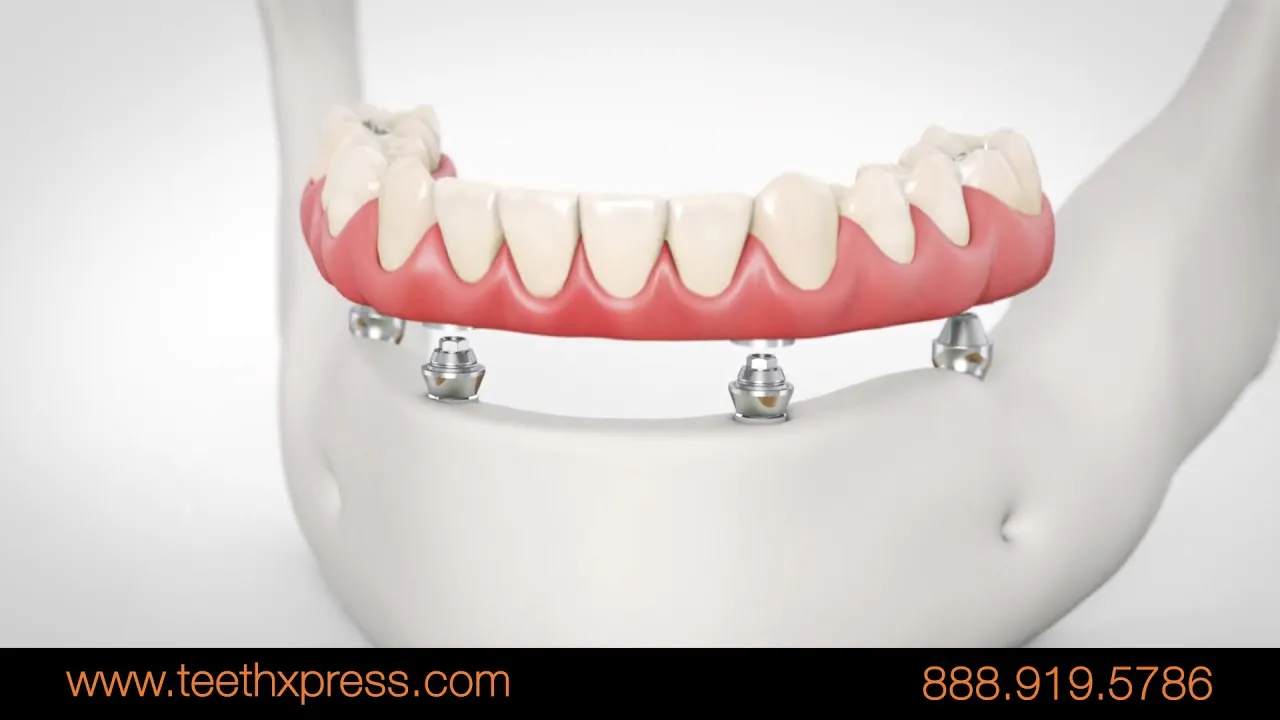
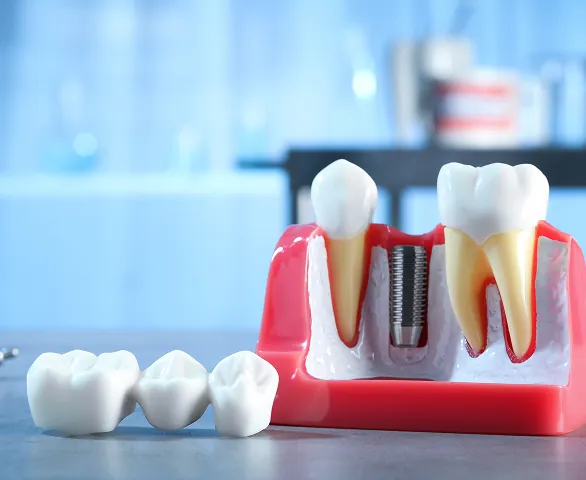
Instead of replacing each tooth with its own implant, a full-arch bridge uses a handful of well-placed implants to hold a complete row of teeth. Because the bridge is fixed, it does not come out at night and does not cover the roof of your mouth the way an upper denture does.

Same-day fixed teeth

For many patients, the full process can begin and end on one surgery day. Any failing teeth are removed, the implants are placed, and a temporary fixed bridge is attached before you go home. Smiles Family Dental offers this type of same-day treatment across our group, and the Fort Worth location brings it to patients in the Hulen and Ridglea areas.

Same-day teeth are not right for everyone. The implants need to be steady enough at placement to support a bridge right away. If the bone is soft or a large graft is needed, your doctor may recommend a short healing period before teeth are attached. We confirm this with your 3D scan and explain it during planning.
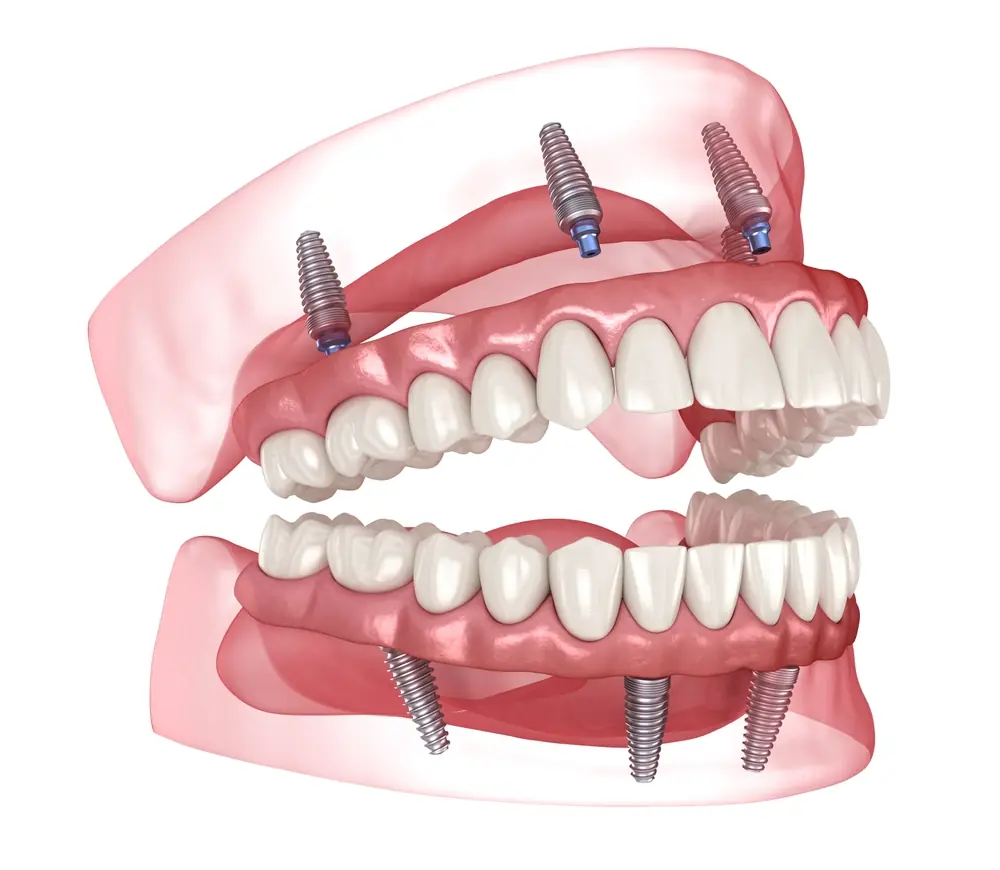
Full-arch implants replace a whole upper or lower set of teeth.

Temporary teeth and final zirconia teeth, explained

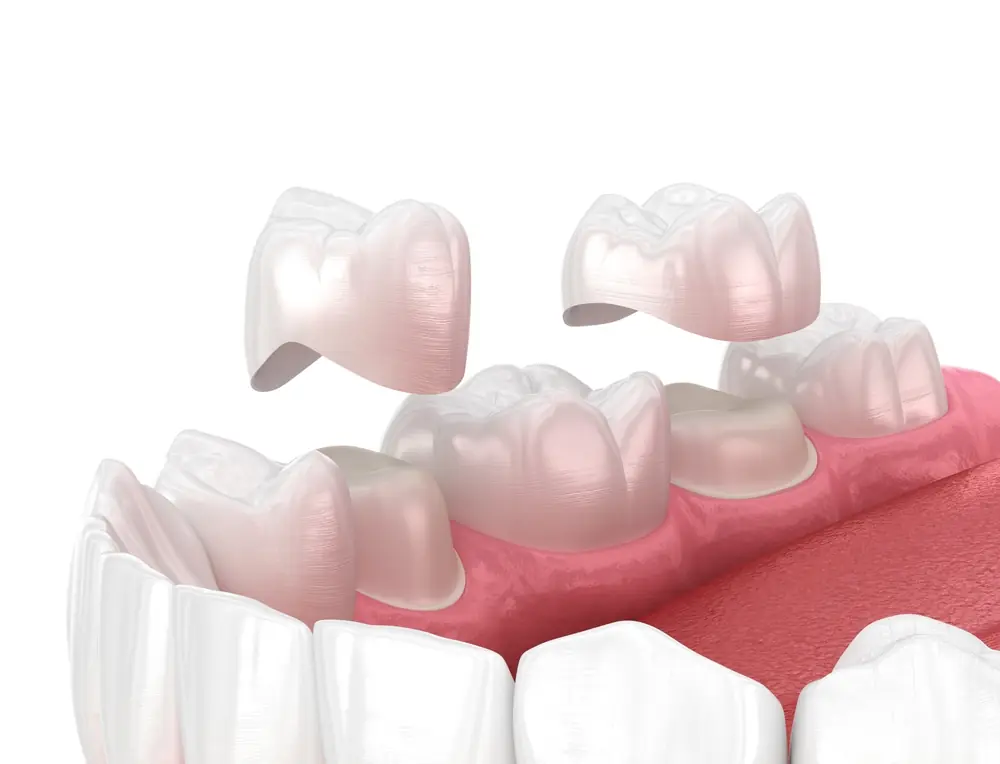
The first set of teeth you receive is a temporary, usually made of a strong acrylic resin. It is designed to look good and let you eat softer foods while your gums settle and your bone bonds to the implants. Gums often change shape as they heal after extractions, so a temporary gives us room to adjust.

After healing, typically a few months later, we make your final teeth. Many patients choose zirconia for this set. Zirconia is a very hard, tooth-colored ceramic that resists staining and chipping. The final bridge is shaped to fit your healed gums, your bite, and the look you want. Some patients choose other materials based on their needs and budget, and we go over the trade-offs with you.

  • Temporary set: lighter material, worn during healing, soft-food diet
  • Final set: often zirconia, made after gums and bone have healed
  • Both sets are fixed and removed only by your dental team

Comfort and sedation for full-arch dental implants in Fort Worth, TX

Full-arch surgery is a longer appointment, and we want you relaxed for it. IV sedation is available, which keeps you deeply calm and often leaves little memory of the procedure. For patients who want an added layer of care, or whose health history calls for it, a physician anesthesiologist can be scheduled for full-arch surgery. This service carries a separate cost, and we will share that in your written estimate.

Plan for an adult to drive you home after sedation and keep you company until evening.

Life after treatment

Swelling and tenderness are normal for the first several days. Most people use prescribed or over-the-counter pain relief and stick to soft foods while the implants heal. Over time, you can usually return to a much wider range of foods than a traditional denture allows.

Fixed teeth still need daily care. A water flosser and special brushes help clean under the bridge. Professional cleanings, where we may remove the bridge to clean thoroughly, are part of keeping the implants and gums healthy for the long haul.

Why the number and angle of implants matter

A full arch of teeth is a long span, and the bite puts serious force on it. Spreading that load over several implants keeps any single post from carrying too much. In the back of the jaw, bone is often thinner, and the sinus or a nerve can sit close by. Tilting the back implants at an angle lets them use the stronger bone near the front while still supporting teeth that reach toward the molars.

This kind of planning is where 3D imaging and guided surgery help most. Your doctor can see the full shape of your jaw before surgery and plan each implant to fit it. Some patients need only four implants per arch. Others do better with five or six for added support. We share the reasoning behind your number so you understand the plan.

Full-arch implants may suit you if you

  • Have most teeth missing in your upper or lower jaw
  • Have many loose, broken, or infected teeth
  • Are frustrated with a slipping or bulky denture
  • Avoid certain foods because chewing is hard
  • Want teeth that stay in day and night
  • Hide your smile in photos
At our Hulen St. office

What to expect, step by step

  1. Consult and 3D scan

    We review your health, scan your jaw, and talk through goals, sedation, and a written cost estimate.

  2. Smile design

    Using digital scans and photos, we plan tooth shape, shade, and bite for your new arch.

  3. Surgery day

    Failing teeth are removed, implants placed, and for many patients a temporary fixed bridge is attached.

  4. Healing visits

    We check your progress and adjust the temporary teeth as your gums settle.

  5. Final teeth

    Once healed, your final bridge, often zirconia, is made and secured in place.

Patient questions

Full-Arch Implants: common questions

Straight answers from our Fort Worth team. If your question is not here, call and ask. We are happy to talk it through.

How much do full-arch dental implants cost?

Full-arch dental implant pricing varies with whether you treat one jaw or both, how many implants go in, extractions or grafting, the material of your final teeth, and your choice of sedation. A physician anesthesiologist is billed separately. You receive an itemized written plan at your consult. Many patients combine partial insurance coverage with monthly financing, FSA or HSA funds, or our in-house savings plan.

Can I really get teeth the same day as full-arch surgery?

Many patients do receive fixed temporary teeth the same day as full-arch implant surgery. This depends on the implants being stable enough at placement to support a bridge right away, which relies on bone quality. If extra healing or a large graft is needed, your doctor may wait before attaching teeth. Your 3D scan helps answer this before surgery day.

What is the difference between temporary and final full-arch teeth?

Temporary full-arch teeth are usually made from acrylic resin and worn for a few months while the gums and bone heal. Final teeth are made after healing and are often zirconia, a hard ceramic that resists chipping and staining. The final set is shaped to your healed gums and bite, so it typically fits better and lasts longer than the temporary.

What is recovery like after full-arch implants?

Recovery after full-arch implants usually involves swelling, bruising, and soreness for about a week, easing steadily after that. Most patients take a few days off work, use prescribed or over-the-counter pain relief, and eat soft foods for several weeks while the implants bond to the bone. Your team will give you clear instructions and check your healing at follow-up visits.

Do full-arch implant teeth come out?

Full-arch implant teeth are fixed and do not come out at home. They are screwed or attached to the implants and can be removed only by your dental team, usually during professional cleanings or checkups. This is a key difference from implant dentures, which snap onto implants and are taken out daily by the patient for cleaning.

Is a physician anesthesiologist required for full-arch surgery?

A physician anesthesiologist is not required for every full-arch surgery, but it is an option at Smiles Family Dental. Many patients do well with IV sedation from their dental team. Others choose an anesthesiologist for added monitoring, deeper sedation, or because of health conditions. This service has a separate cost, which is included in your written treatment estimate.

Paying for full-arch implants

We file insurance for you, accept FSA and HSA cards, offer monthly financing and have an in-house savings plan for patients without dental insurance.

See payment options
Fort Worth · Hulen St.

Ready when you are.

Call our Hulen Street office or request a time online. We will review your insurance, explain every option in plain language and give you a written plan before anything starts.